STOP CLIMATE CHANGE?


You can protect the future for your grandchildren...
But only if you ACT NOW!


POLITICIANS CAN'T DO IT!
SCIENTISTS CAN'T DO IT!
ONLY YOU CAN!


"Uamby"
RMB 384 Uamby Rd
Goolma NSW 2852

Sunday 10.11am

Dear Friend,

I am just a farmer. I'm no scientist, but I do know about the weather. Something has gone seriously wrong. As I write, there is another bush fire out of control, just 30-odd kilometres to the north west of us. Yesterday the temperature gauge hit the low 40's - well into the 100s farenheidt. Today it's 22°C. We're suffering in the worst drought in 1000 years. The bores are running dry. But at Christmas we got a massive hailstorm. And lately we have electrical storms with no rain. The weather seems to have lost its mind.

Tsunamis, cyclones, heat waves, wind storms... nothing's normal anymore. We're told the ice cap at the North Pole is melting so fast that experts are afraid the polar bears will drown. That's right, drown...
What will happen to the rest of us? No one can tell. America - the world's biggest emitter of CO2 - refused to join the rest of the world to cut back the CO2 pollution. Australia also refused.

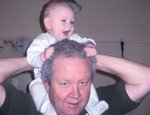
State governments, big companies, members of their own political parties... everyone is pleading with George W. Bush and John Howard to ACT NOW to save the future for our grandchildren. George Bush has another 2 years as President. The world can't wait that long. You can't wait. I can't wait. (Just now, my 4-year-old grandson Xavier came into the room asking for a lolly. It breaks my heart to think that I may not be there to help him when the worst happens. I have got to do something... now.)

That's why I thought of you and all the people like you who love children and worry about what will happen to them.

BUT WHAT CAN I DO?

YOU CAN DO A LOT:
1. Talk to people about your worries. Get them thinking about it.
2. Call your MP and write to PM Howard. Use your vote.
3. Buy carbon credits to neutralise the CO2 you release into the atmosphere when you use electricity or drive a car.

But don't just buy any carbon credits. BUY AUSTRALIAN FARMSOIL CREDITS. They are the only credits that can do something serious about the Climate Change problem in the time that we have left.

SOILS CAN SAVE THE WORLD!

In 2005, we first heard soil carbon expert Dr Christine Jones speak and we discovered that agricultural soils are the only way to remove the trillions of tonnes of CO2 out of the atmosphere and avert a global catastrophe in the short time we have left.

We formed a farmers' movement called the Carbon Coalition Against Global Warming to recruit farmers to fight the battle against Climate Change. The Coalition is now 500 strong and growing. We went to America to meet the global warming experts there. We've met the experts here. They all agree with us. Only soils can save us. Forests can't do it in the time. (The world couldn't plant enough trees fast enough. Trees can't grow fast enough to do the job. And the cost of the planting is more than anyone is willing to pay.)

Agricultural soils are ready, willing and able. 60% of the earth's surface is used for grazing animals. Soil is already the biggest carbon "sink" we can control. All it would take is a change in the way farmers farm to start eating into the massive overload of CO2 in the air.


If we were able to increase soils carbon just 1% in only 10% of Australia's agricultural soils, we could 'sequester' or extract from the air 10 years' worth of our emissions. Do it 4 years in a row and that's 40 years' worth of emissions.

HOW CAN AUSSIE FARMERS FIGHT GREENHOUSE?

Australian farmers can combat global warming by changing the way they farm. There is an entirely new way of farming called "CARBON FARMING" which absorbs CO2 from the atmosphere. But farmers need to be taught about it and incentivised to change - by being offered credits for the carbon they absorb.
HELP THE CARBON COALITION SPREAD THE WORD TO FARMERS
Speading the word about Carbon Farming: We spend many hours meeting with farmers

We are travelling all over the country teaching farmers about how to become Carbon Farmers - how to change the way they farm so that their soils will absorb more CO2. But they need to be given the carbon credits in the same way forest owners are. We have an order from the Chicago Climate Exchange for the first soil carbon credits. We need your help to get started.

The Carbon Coalition meets with the National Farmers Federation CEO David Crombie who supports our mission


STRIKE A BLOW AGAINST CLIMATE CHANGE!
This is your chance to be among the first to buy Soil Carbon Credits in Australia. These Credits can be used to 'offset' the emissions you and your family make everytime you switch on a light or cook a meal or drive the car or fly in an aircraft.

They are not simply "Carbon Credits". Remember: most other carbon credits do not do anything about the massive overload of CO2 in the atmosphere that is causing global warming. They only prevent new emissions adding to it. SOIL can 'sequester' carbon - using plants to breathe in the CO2 during the day, separate the Carbon and the Oxygen which is released at night while the Carbon is trapped in the soil.

But more than that, SOIL Carbon Credits also preserve the environment by rewarding farmers for 'conservation farming'. Carbon Farming builds richer, more nourishing soils, that in turn provide the best environment for bugs and worms and insects, and these bring the native birds and the little native animals like Quolls, and more wallabies and kangaroos. And bountiful pasture so there is plenty of grass for them and the farmer's sheep and cattle.
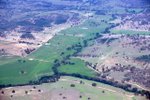
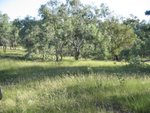
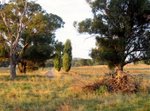
CARBON FARMING: FLOURISHING HEALTHY GRASSY WOODLAND PASTURES
There is less erosion and less salination, less water lost to evaporation. More trees because they encourage soil carbon and they take up CO2 as well. Carbon Farmers cooperate with Nature. Soil credits pay them to protect and defend the ecology while fighting Climate Change.
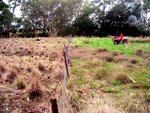
"EXTRACTIVE" FARMING IS A FORM OF MINING: HEAVILY ERODED AND DEGRADED FARMLAND

HOW DO WE MEASURE SOIL CARBON FOR CREDITS?

The scientists can't agree. There is uncertainty in precisely how much carbon is locked down by every technique. The officials want us to spend 4 years doing more field trials, more delays. The world can't wait.

The CARBON FARMERS OF AUSTRALIA SOIL CREDIT is based on the following indicators:

1. The history of soil management for the plot in question.
2. The history of soil management for the entire property.
3. The training record of the land manager.
4. The land management techniques used on the entire property.
5. The imputed increase in soil carbon in the plot in question over the period since the change in land management.
6. Membership of Carbon•Farmers™ Of Australia, a group of conservation land managers who are also actively working to restore the natural resource base.

NB. When the politicians and scientists finally catch on to the danger we are facing and the need for soil carbon credits, we will have a new system that accurately measures out the Carbon 'sequestered'. But we can't afford to wait for them. In the words of Professor Stuart Hill, UWS, "If you get tangled up in measurement you will sink into a quagmire and never achieve your goal."

"PROVISIONAL CARBON CREDITS" - HOW THEY WORK

CARBON FARMERS OF AUSTRALIA SOIL CREDITS are Provisional Carbon Credits. This is your guarantee that you are getting what you pay for. They are set at a very conservative rate of 2 tonne CO2e per hectare per year where land management has changed since 1990:

• from till to no till (ploughing to no ploughing)
• from till to pasture
• from set stocking to grazing management

These categories are based on estimates published by authorities such as the Australian Greenhouse Office: "The review clearly indicated that the introduction of a cropping phase into uncleared land or a well-established pasture with high plant biomass, reduced soil carbon density by 10 to 30 t/ha in soils to 30 cm depth... Likely changes in soil carbon densities associated with changes in soil tillage practices are of the order of 5 to 10 t/ha when they occur..." (Australian Greenhouse Office, National Carbon Accounting System, Technical Report No. 43, January 2005) And the work of leading CSIRO soil scientists Roger Swift and Jan Skjemstad: “…it is suggested that a sequestration rate in the of about 2 Mt C pa is within the realms of possibility… Ideally the carbon levels can be restored to the same values that were supported the soils in their virgin state under native vegetation. In some instances the soils may be capable of sustaining higher organic matter levels than in their virgin state... Let us assume that half of the total amount of carbon lost from these soils can be recovered over a twenty year period and that in any one year one third of the 45 M ha is in a recovery or organic matter build-up mode. On this basis...the annual rate of sequestration of carbon by agricultural soils would be in the region of 4.4 Mt C pa. A more conservative target of 2.2 Mt C pa based on the treatment of 7.5 M ha pa ... could well be achieved. “- Roger Swift and Jan Skjemstad, “Agricultural Soils as Potential Sinks for Carbon”, CSIRO Land and Water for the CSIRO Biosphere Working Group, http://www.dar.csiro.au/csiro_reserved/BWG/agricultural_soils.htm Our estimates are also informed by K.Y. Chan’s work on soil carbon levels under different land management methods in NSW which revealed that soil carbon levels were 2 to 2.7 times higher in pasture soil than in cropped soils, and up to 2.4 times higher in minimum till than in conventional tillage soils. (Chan, K.Y. “Soil particulate organic carbon under different land use and management,” Soil Use and Management (2001) 17, 217-221.)


Once the science provides us with a verifiable measurement approach, the surface area will be rescaled to meet the amount 'measured' in the soil below.

Provisional Carbon Credits allows the Soil Storage of CO2 to start!

YOU GET MORE THAN CO2 REDUCTION

You get more than carbon credits when you buy from Carbon•Farmers™. You help support the work of the Carbon Coalition Against Global Warming which is promoting the benefits of soil carbon credits and teaching farmers about Carbon Farming. The Convenors Michael & Louisa Kiely, carry the word far and wide, from Cobar to Kingaroy and beyond. They speak at conferences and to the media. They meet with politicians and scientists to argue the case for soil carbon credits.


When you buy farm soil credits from Carbon•Farmers™of Australia, you support the work of the Carbon Coalition Against Global Warming. The money is spent campaigning to enlist Australian farmers to join the battle against Global Warming.
.


HOW TO BUY AUSTRALIAN FARM SOIL CREDITS

Simply use the online payment system below. If you have questions, call Carbon•Farmers™of Australia on (612) 6374 0329.


WHY OTHER SOLUTIONS WON'T WORK FAST ENOUGH


Forests

• Not enough forests could be grown in the world to sequester enough CO2 in the next 10-30 years.
• Forests are an expensive option compared to soil.
• "Forests" used for CO2 sequestation are not natural forests. They are plantations or tree farms. They can reduce biodiversity.

Clean Coal

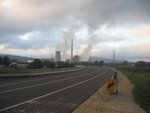
• Clean Coal means burning coal and ‘scrubbing’ the CO2 out of the emissions before they reach the atmosphere.
• Scrubbing intercepts only new CO2 emissions. This makes no impact on existing CO2 loads in the atmosphere which must be ‘sequestered’ quickly to prevent the global temperature rising above the 2°C level already predicted to result from CO2 emitted years ago.

Geo-sequestration

• Geologic sequestration means the burial of liquid CO2 (obtained from scrubbing) deep underneath rock formations underground, including exhausted oil wells and coal seams.
• As with Clean Coal, Geo-sequestration can only deal with new emissions, not the existing atmospheric load that is driving the global temperatures up.

• The public acceptability of trillions of tones of liquid CO2 being pumped under the earth when scientists are not sure what the long term security of these caches is doubtful, given that any leakage can have deadly results for life above ground.

Deep ocean burial

• The US Government is planning to pump trillions of tones of CO2 into deep ocean trenches.
• As with Clean Coal and Geologic Sequestration, this solution addresses only new emissions, not the existing atmospheric load.

Solar energy

• Alternative and renewable energy sources cannot impact on the CO2 already in the atmosphere.
• They can reduce future CO2 emissions.

Wind turbines

• Wind generation of electricity does not sequester CO2 already in the atmosphere.
• They can only reduce future CO2 emissions.

Long life light bulbs

• Low power light bulbs can reduce emissions in future.
• They cannot impact on existing CO2 loads in the atmosphere.

FOR MORE INFORMATION
Contact Convenor Michael Kiely 0417 280 540, or 02 6374 0329
Or visit www.carboncoalition.com.au.
Blog http://carboncoalitionoz.blogspot.com

THE FARMERS of the CARBON COALITION

(YOU WILL FIND THE PROFILES OF REGISTERED CARBON FARMERS AT THE BOTTOM OF THIS BLOGSITE.)

The Carbon Coalition invites all carbon farmers to join Carbon Farmers of Australia. To be eligible, farmers have to manage their land to grow healthy soil first and last. Soil health is the key to better crops and better pasture. It is the key to better usage of water. It is the key to stopping salination of soils. It also promotes biodiversity – the return of species of native grasses, flowers and shrubs, insects, birds, and small mammals like marsupial mice and Bettongs – because the food chain starts down in the soil. A Carbon Farmer believes that the biological activity in the soils is the engine room of growth. A Carbon Farm will have more wildlife and more native vegetation than a conventional farm.

Angus Maurice is the youthful face of the next generation of carbon farmers. His property is near Spicer's Creek in NSW. He has been an active member of the Carbon Coalition Council.


Cam McKellar is a biological farmer and a biodynamics practitioner as well. Cam's property near Spring Ridge is on the rich Liverpool Plains. He is committed to soil health and carbon farming techniques.

Robert and Maree Goodear were recognised as Conservation Farmers of the Year for 2006. They are long term members of the Carbon Coalition.


David Marsh, Col Seis and Rick Maurice have been active members of the Carbon Coalition and are leaders in the carbon farming movement. David Marsh is a holistic manager whose property near Booroowa is described as a textbook example of conservation farming. Rick Maurice is former chairman of the Conservation Farmers Association and an active carbon farmer. Col Seis, a winner in the Innovative Farm Plan competition, is a pioneer in the field of Pasture Cropping - a carbon farming technique for cropping.


Stephen Kiss and Tim Woods are award-winning carbon farmers. They won the Most Innovative Farm Plan competition as part of the Central West Catchment Management Authority's Farming Systems program.

WHAT THE EXPERTS SAY

WE VISIT THE WORLD'S EXPERTS

“It buys us time…” “C Sequestration in soil and vegetation is a bridge to the future. It buys us time while alternatives to fossil fuel take effect.” - Dr Rattan Lal, Director, Carbon Management and Sequestration Center, Professor of Soil Science, School of Natural Resources
Ohio State University

“Unlike others… it is immediate…”
"Unlike many other technologies to offset fossil fuel emissions, land management for soil C sequestration can be implemented immediately.... An immediate offset of CO2 emissions provides a significant delay in the rise of atmospheric CO2 concentration. By the time that we saturate the soil’s capacity to store additional C, other methods of reducing emissions or sequestering carbon may be available or already in use.” - Professor Bruce McCarl, Agricultural Economist and Economist, Climate Change, Texas A&M University; Member of the Intergovernmental Panel on Climate Change.
DR MCCARL WITH MICHAEL & LOUISA KIELY AT TEXAS A&M UNIVERSITY
“Available… low cost…” "Terrestrial C sequestration has immediate application in climate change mitigation due to its availability and relatively low cost."
- Professor Charles Rice, Department of Agricultural Economics, Kansas State University, Director of the Consortium for Agricultural Soils Mitigation of Greenhouse Gases. Dr. Rice is recognized as one of the leading soil microbiologists in the United States.

“It’s here… now…”
“Terrestrial sequestration is here and now. It’s user friendly. It’s easy to do. It can play a critical role in the early stages of our response, ahead of other methods [forestry, geologic burial].” - Dr. John Antle, Professor of Agricultural Economics and Economics at Montana State University, Technical Leader, Economics, BigSky Carbon Sequestration Partnership

“Forests are limited…”
“Soil represents the largest carbon sink over which we have control. Improvements in soil carbon levels could be made in all rural areas, whereas the regions suited to carbon sequestration in plantation timber are limited.” - Dr Christine Jones, director, Carbon For Life Inc.

DR CHRISTINE JONES, SOIL CARBON PIONEER
“Increases in soil carbon already achieved…”
“These levels of increase in soil carbon are achievable, and have already been achieved, by landholders practicing regenerative cropping and grazing practices.”

Dr Christine Jones, Australian soil carbon specialist, director, Carbon For Life inc.


WHO IS ASKING FOR YOUR SUPPORT IN THE BATTLE AGAINST GLOBAL WARMING?


Michael and Louisa Kiely are Convenors of the Carbon Coalition Against Global Warming and regular speakers at the “Managing The Carbon Cycle” Forums around Australia. They have been delegates at many high level symposia in Australia and the USA. The couple endured 25 flights in 22 days on a fact-finding tour of the USA on behalf of Australian abatement providers in 2006. While there, they negotiated the first order for soil carbon credits from the Chicago Climate Exchange. They appeared as expert witnesses before the NSW Premier’s Advisory Panel on Greenhouse Gas. They are members of the Australian Business Council for Sustainable Energy. For the Carbon Coalition - which has more than 550 members across Australia and a chapter in the USA - they manage member registration and communication (email newsletters, websites and blogsites), lobbying and representation to federal and state politicians and ministers, fundraising and seeking sponsorship, seeking funds for research, co-ordinating submissions to government climate change and carbon trading enquiries, and liaising with scientists. They set up Carbon Farmers™ as a vehicle so members could trade their soil carbon.

SUPPORT FOR AUSTRALIAN FARM SOIL CREDITS


TIM FLANNERY SUPPORTS SOIL CREDITS
“One of the great opportunities inAustralia is sequestering or
storing carbon in the soil… I think it will be a major industry world wide in future and whoever has access to broad acres will be very advantaged in that. The broad figures are that we can store enough carbon in the living biosphere… to offset all of the carbon emissions since the beginning of the industrial revolution.” (ABC TV 11/02/2007)

FARMERS' ASSOCIATION BACKS AUSTRALIAN FARM SOIL CREDITS
NSW Farmers’ Association President Jock Laurie says: “Farmers can help Australia by storing carbon on their land, essentially pulling carbon from the atmosphere and storing carbon in the soil and in vegetation... We want to see soil carbon included as a tradable carbon store at state, national and international levels.”

COMMISSIONER JOHN WILLIAMS SUPPORTS SOIL CREDITS

John Williams, Commissioner for Climate Change, NSW, says: “75 per cent of the carbon stored on land is stored in soil. Now, farmers can manage the storage of carbon … in the soil… which is an important part of managing our way forward in climate change.”

MEET OUR CARBON FARMERS


"DAIRY PARK", MANDURAMA

Grant and Liz Molloy live and work on “Dairy Park”, a 2300 acre working farm set in the picturesque rolling hills of the central tablelands of New South Wales, near the town of Mandurama. The property has been in the Molloy family since the 1830’s.

Grant and Liz run sheep for lambs and wool, along with beef cattle breeding. We use Holistic Management principals in managing our farm and our lives. These principals help create biodiversity and sustainability.
The farm has horses, working dogs, hens and a pet dog.


There are wild kangaroos, echidnas, goannas and emus roaming the property as well as a wide variety of bird life.

'Dairy Park" has never been a dairy. In fact, it was meant to be called 'Derry Park' afetr Derry in Ireland. But often in the early days of the Colony, when many were illiterate, the thick Irish accent was misheard. 'Derry', pronounced in thick Irish brogue, comes out as "Dairy".


"WINONA", GULGONG


Colin Seis, Gulgong

Col runs 4000 head of sheep and crops cereals including oats, wheat and lupins on ‘Winona’, an 840-
hectare (2075 acre) property in the central tablelands of NSW. The family has been in the area for 150
years and have always been prepared to try innovative methods – in 1933 they were one of the first farmers in the area to
use superphosphate, which initially doubled wheat yields.

By the 1970s the family started to see that traditional farming methods weren’t sustainable. A combination of falling wool prices and rising superphosphate costs meant that it was less financially viable to fertilise pastures. At the same time, plants were failing to respond to fertilisers and bigger doses were needed to achieve the same effects. Dryland salinity, soil acidity and annual weeds were becoming problems. In 1979, crisis came. A major bushfire destroyed most of the farm, including buildings, sheep, pastures and fencing. This dramatic loss forced the family to start looking seriously at lower input methods because they simply couldn’t afford high inputs. Colin investigated family history records and discovered that the original landscape of the tablelands had been grassland with scattered trees. He came to realise that the native grasslands must have played a major role in controlling ground water and keeping salinity at bay. The family decided to stop using superphosphate. Their rationale was that the improved pasture species, which were dependent on fertiliser, would
die out and the native pasture species would return.

Colin re-thought his entire management approach and changed his farming system at every level. He decided to combine grazing and cropping rather than considering them as separate enterprises. This was a way of looking at the farm holistically rather than piece by piece. Colin changed his grazing method from set grazing to a cell grazing method that he calls ‘pulse grazing’. A mob of up to 3000 sheep is moved around the 51 paddocks (average size 16 hectares), spending 2-4 days in each paddock before being moved on. The paddock is given up to 3 months of rest to allow the native grasses to recover before being grazed again.

Colin also turned his attention to cropping. He believed it didn’t make sense to destroy a pasture by ploughing to sow a crop.
‘It takes 6 months to prepare a paddock to grow a crop for 2 or 3 months, and then it might be affected for 10 years afterwards, all for 2 or 3 months feed,’ said Colin. ‘It’s lunacy to do that. There had to be a better way. My father always disliked ploughing up pastures to plant crops, but in his time the technology just wasn’t there to do it differently.’ About 10 years ago Colin and his neighbour Daryl Cluff started bouncing ideas around. They believed it would be possible to sow winter cereal crops directly into summer-growing native perennial pastures that were dormant through winter. The pasture could be grazed right up to the point of sowing and stock could be put back on the pasture after harvest to graze stubble and green perennial grasses. They starting using the method and found that it worked. Sheep are put into the pasture at the density of 70-80 head per hectare for up to 6 days to reduce the bulk of grasses. This is repeated 30 days later. The sheep
control weeds, open the grass canopy, mulch the grass and help feed soil microbes. One week after the sheep are removed, a low rate of knockdown herbicide is applied to control annual weeds and the area is almost immediately sown with zero till
seeding equipment. A one pass operation places oat seed and fertiliser in 30 cm rows with very little disturbance to the surface ground cover.

Colin’s aim is 100% ground cover, 100% of the time, including under crops. He believes this maxim is essential for developing farming systems that are profitable and able to actually solve environmental problems.
The Department of Agriculture carried out an economic analysis, comparing ‘Winona’ with a traditional farm of the same size, with similar soils and sheep. The department found that the pasture cropping method of farming could be more profitable than traditional methods, and that the degree of increased profitability would depend on the current level of grazing overheads (such as pasture seed, pasture maintenance and casual labour).

Winona’s soils are becoming healthier as a result of the grazing and cropping methods. Colin is reducing fertiliser inputs and has grown some crops with no chemicals at all. He believes that nutrients are now cycling through the soil and releasing phosphorous naturally – as evidenced by the fact that 20% of the pastures are still healthy sub-clover.
As well as increased productivity, Colin has found huge benefits in terms of biodiversity increases and salinity control.
‘Pasture cropping and pulse grazing have dramatically increased pasture biodiversity,’ said Colin. ‘The pulse grazing definitely improves biodiversity in perennial grasses, but I was surprised to find that the pasture cropping took it to a whole
new level. We had huge increases in plant diversity and numbers after just one year of sowing a crop that
way. It was a spin-off that we didn’t expect at all, that the crop would actually stimulate the pasture. ‘Looking at grasslands and soils is the key to turning salinity problems around. If we can get groundcover on the saline parts of the property, then they can actually be very productive, especially in dry times. I believe our native pastures act like huge sponges, holding water in suspension. If we can get back to that, I think a lot of our salinity problems would disappear.’

‘Don’t spend a cent,’ is Colin’s advice to other farmerswanting to work their land more sustainably. ‘Put your
animals into large mobs and start moving them around the infrastructure you already have. Focus on native perennial pastures – they’ve evolved here and obviously they are the best plants for Australia. ‘Throw away your disc plough – if you’re going to grow crops, use zero till. Only kill the weeds that are competing with the crop, leave everything else alive. ‘The hardest thing to change in all of this is to change you’re head. Once you’ve done that, the rest is easy,’ he said.


INVERARAY DOWNS

(First appeared as "Biological farmers look back to the future", Reporter: Sean Murphy, ABC Online Home, First Published: 10/10/2004)


Cam McKellar's "Inveraray Downs" is on the black, cracking, self-mulching clay soil on the Liverpool Plains of northern New South Wales. He is a biological farmer,a biodynamics practitioner, and a holistic manager. "Every day the farm's mixed herd of 300 is packed tight into a hectare plot to feed and break down stubble from previous crops," reported Sean Murphy.


"Where we're using the cattle, as quick stubble digesters they're going through and eating the sorghum stubble and the corn stubble, Cam McKellar said. "We've flown barley over the corn and sorghum before and that keeps something growing in the soil to keep a house going for the microbiology, the cattle go through they eat that out," he said. "They then with the hoof action are breaking up that stubble which is very hard to do so otherwise and then as quickly as possible we're getting another crop in it."


More than four tonnes of wet manure a day is added into the mix. Cam McKellar calls biological farming. "Anything to get away from what we have been using in the past, basically acid fertilisers and as many insecticides as possible. Every operation we do we try to make softer for the soil biology so we don't kill it so we actually enhance what's there and it's starting to work. We can see it happening over the last 3 or 4 years from when we started," Mr McKellar said.


The aim is to get as much organic matter as possible to build up the soil biology. It makes better use of water and nutrient inputs. In one paddock, in three years, he grown wheat, sorghum, corn and barley as well as clover, rye grass and winter wheat.
"You can see the soils flocculating better, the worms here are just going silly. That's all worm casting there you can see so rather than give this plot a rest you've just kept the growing activity going as much as you could."


Cam McKellar saw that the cycle of high inputs and reduced outputs would makethe formersheep station developed by his father Graham 40 years ago unsustainable. He shifted to biological farming reduced inputs by more than a third in three years.
Cam McKellar already uses a range of biologicals such as humic acid, a natural stimulant, which improves the take up of nitrogen by up to 100%.

He believes there are biological solutions to most of the problems now being treated artificially. "Insects, weeds, pests and disease are a lack of minerals in the system, not a lack of insecticide, herbicide, pesticide or fungicide. So if we can rectify that we can rectify the quality of the food we produce, we can get some nutritional integrity in the food, not the fairly shoddy product that most of our farmers produce today," he said.